
Get Support
+91 98540 40005

Dharapur Vs Beltola: Which Is Better For A Family Home In Guwahati?
-
 By: Ankit Baheti
 - 16th June, 2026
- 0 Comments
- 372 Views
Key takeaways:
- Introduction
- Dharapur vs Beltola: Which Locality Actually Fits Your Family?
- What Do Property Prices Look Like in Dharapur vs Beltola in 2026?
- How Do Dharapur and Beltola Compare on Location and Connectivity?
- Which Locality Wins on Social Infrastructure - Schools, Hospitals, and Daily Life?
- What is the Lifestyle and Neighbourhood Feel Like in Each?
- Who Should Choose Dharapur?
- Who Should Choose Beltola?
- Dharapur vs Beltola: The Final Head-to-Head Comparison
- Is There Really No Universal Answer Here?
- Conclusion: Which Should You Choose for Your Family Home in Guwahati?
- Frequently Asked Questions (FAQs)
If you are comparing residential areas in Guwahati, Dharapur and Beltola are likely the two names you keep running into, and figuring out which one actually fits your family can be confusing when both come with strong but very different selling points. This guide uses real listing and locality data to break down how Dharapur and Beltola compare on price, connectivity, schools, and lifestyle, so you can match the right locality to how your family actually lives, not just to a number on a price chart.
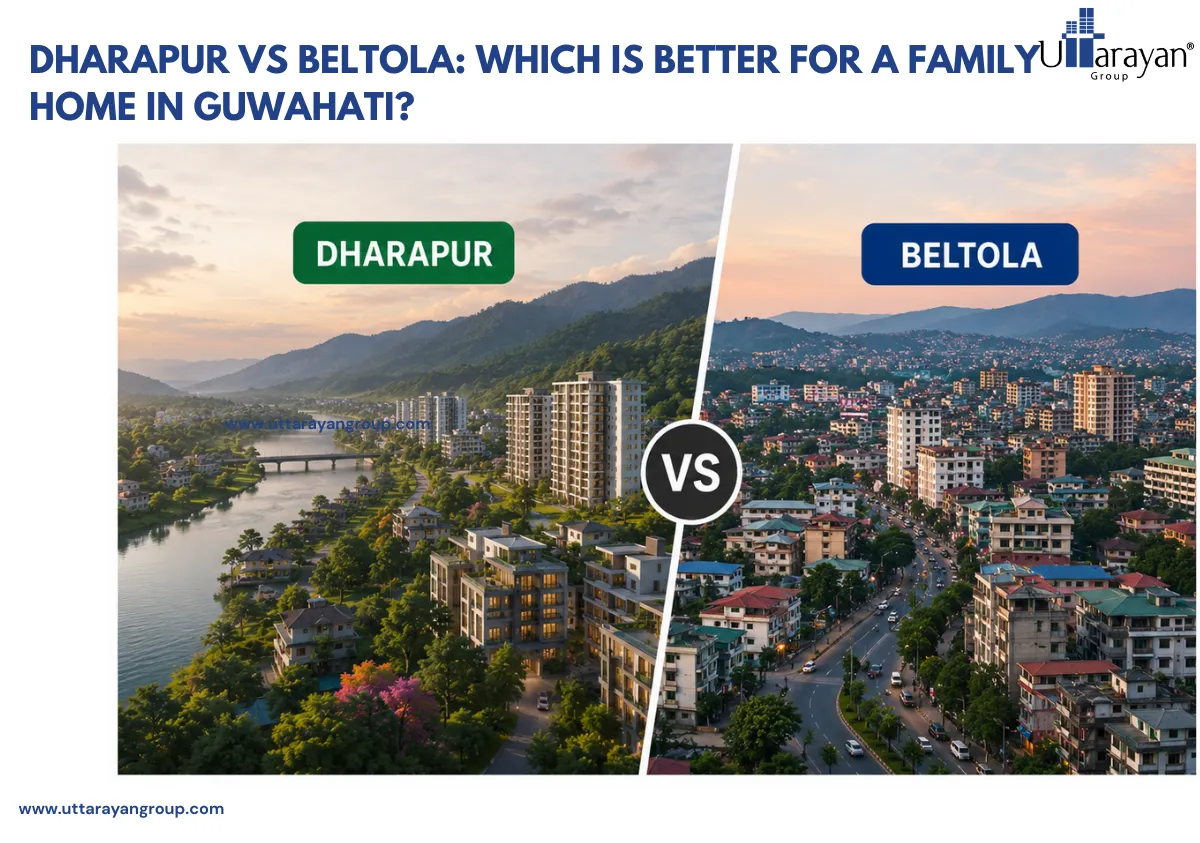
Dharapur and Beltola. These two names have surely come up more than once if you are shortlisting residential areas in Guwahati for your family. One is the cities rising airport corridor star. The other is one of south Guwahati most established and livable addresses. Both are excellent choices. Both have real data behind them.
But there is one catch. What is right for family A, may not be the right choice for family B. A family with school-going children and two working parents has different priorities than a family relocating from outside Guwahati or an NRI buying a home for their parents. And the two localities serve these different needs quite differently.
We will break down both localities number by number, factor by factor, so that your decision is grounded in reality and not just the builders brochure.
What Do Dharapur and Beltola Look Like at a Glance?
Before we get into the details, here what the numbers actually say:
| Factor | Dharapur | Beltola |
| Current price/sq. ft (Q1 2026) | INR 3,913~ | INR 4,400~ |
| 3-year appreciation (2023–2026) | +26.2% | +33% |
| Zone type | Airport Corridor | South Belt |
| Entry price point | More affordable | Mid-premium |
| Airport proximity | 8–12 mins | 25–30 mins |
| School density | Moderate, improving | High |
| Hospital access | Moderate | Excellent |
| Daily market access | Adequate | Excellent |
| NRI buyer demand | High | Moderate |
| New project supply | Active | Moderate |
*Important note: Price figures are directional market estimates based on active listing data and should not be treated as guaranteed valuations. 2020 base prices used for appreciation back-calculations are estimates derived from available 3-year data. Property prices vary by floor, unit size, project quality, and specific micro-location within each locality. Always verify current pricing directly with the developer or a RERA-registered agent before making a purchase decision.
Both localities have near-identical appreciation percentages over three years. But the story behind those numbers is completely different. And to be honest, that is what matters for a family making a long-term decision for an important asset like HOME.
How Do Dharapur and Beltola Compare on Location and Connectivity?
Dharapur: The airport corridor address
The location of Dharapur is along the NH-27 corridor. It is in the west of Guwahati city, and its entire growth story is tied to that location. The six-lane expansion of NH-27 reduced travel time. It also changed the fundamental nature of this locality. What was once considered "too far out" is now a legitimate, well-connected residential option.
For the families in which one or both members are travelling, or where one needs to visit the airport frequently, this is a great choice. Again, if someone is going to Jalukbari or visiting the Guwahati employment zones, the Dharapur location gives a genuine advantage.
The commute to the city centre (GS Road, Paltan Bazar) takes around 30- 40 minutes depending on traffic. But for families who do not need to go downtown every day, this aspect is often worth it for what Dharapur offers in return. You get newer buildings, larger floor plans, and a quieter neighbourhood feel.
Beltola: The south Guwahati anchor
When it comes to Beltola, the story is completely opposite. It is located in the heart of south Guwahati most mature residential belt. There is strong road connectivity to GS Road, Dispur, Khanapara, and the Ring Road. All the social utilities like schools, hospitals, markets, and workplaces are either within the locality or within a 10- 15 minute drive.
Beltola central positioning within south Guwahati is a clear thumbs- up for families with school-going children, or where both parents are working professionals. In a nutshell, if you need easy daily access across the city, Beltola is a good choice. There is no “daily long drive” headache.
Now what is the tradeoff? Beltola is denser, busier, and demands a higher per sq. ft price for that convenience. The properties in Guwahati established belts always carry a proximity premium, and Beltola is no exception to that.
What Do Property Prices and Appreciation Actually Show for Dharapur vs Beltola?
Current price comparison
Flats in Beltola, Guwahati are currently averaging around INR 4,400/sq. ft as of Q1 2026, based on active listings. Dharapur sits lower at approximately INR 3,913/sq. ft.
This means a gap of roughly INR 487/sq. ft.
On a 1,200 sq. ft flat, that is a difference of about INR 5.8 lakhs in purchase price. That is real money, especially for first-time buyers.
Appreciation trajectory: Both at 33.3%, but from different starting points
One interesting thing to note here is that both Dharapur and Beltola have delivered roughly 26 to 33.3% appreciation over three years. But the infrastructure drivers are different. And this is the most important thing when you are trying to forecast the next cycle.
Dharapur was driven by the NH-27 six-lane expansion, rising NRI buyer demand, and new RERA-registered project launches that raised the entire zone price floor.
Beltola appreciation was driven by the organic demand from families upgrading within south Guwahati, consistent professional tenant demand, and proximity to established employment zones.
So, the main question is: Has the catalyst run its course, or is there more appreciation ahead?
For Beltola, the growth is likely to remain steady and demand-driven. It is consistent, but without sharp spikes. For Dharapur, it is a matter of discussion. NRI demand remains strong, and new projects continue to enter the zone. Also, the Metro corridor discussions for western Guwahati could provide a second wave of infrastructure uplift.

Which Locality Wins on Schools, Hospitals, and Daily Infrastructure?
| Factor | Dharapur | Beltola |
| Schools | Functional schools available nearby, but many top-tier schools require a 20–30 minute drive toward central Guwahati. | Several established schools within or adjacent to the locality, offering convenient access. |
| Healthcare | Basic healthcare facilities available locally. Specialist care typically requires travel to GS Road or Khanapara. | Easy access to hospitals, clinics, and specialist healthcare services. |
| Markets & Grocery | Local markets and commercial zones have improved significantly, especially along the NH-27 corridor. Sufficient for daily needs. | Mature retail ecosystem with extensive options ranging from fresh produce to branded stores. |
| Daily Convenience | Adequate for everyday living, but residents may need to travel for certain services and amenities. | Most daily needs can be met within the locality, making errands quick and convenient. |
| Support for Families with Children | Suitable, but school access may require more planning and commuting. | Highly convenient due to proximity to schools and family-oriented services. |
| Support for Elderly Residents | Access to specialist healthcare may involve longer travel times. | Strong healthcare infrastructure reduces travel and improves convenience. |
| Commercial Activity | Growing and developing, with improving infrastructure. | One of South Guwahati most established commercial hubs, anchored by Beltola Bazar. |
| Neighbourhood Maturity | Developing residential area with improving social infrastructure. | Fully developed, mature neighbourhood with comprehensive social infrastructure. |
| Best For | Buyers seeking newer development, lower entry costs, and long-term growth potential. | Families prioritizing convenience, established amenities, and a complete urban lifestyle. |
So based on the above analysis,
| If your priority is | Better Choice |
| Long-term appreciation potential | Dharapur |
| Access to schools and healthcare | Beltola |
| Convenience for elderly parents | Beltola |
| Everyday shopping and services | Beltola |
| Lower-cost entry into the market | Dharapur |
| Complete, ready-to-live neighbourhood | Beltola |
What is the Real Lifestyle and Neighbourhood Feel in Dharapur vs Beltola?
In Beltola, you get a dense, established, urban neighbourhood. It is convenient, well-connected, and familiar. But it is also noisier, more congested, and offers less open space. Much of the existing building stock here is older or mid-tier unless you are specifically looking at newer RERA-registered projects in the periphery of the locality.
In Dharapur, the neighbourhood feel is newer, quieter, and less congested. Many of the residential projects here are purpose-built apartment complexes with modern amenities. They have clubhouses, landscaped areas, and parking. This is because they have been built in an era of RERA compliance and rising buyer expectations.
The main question here is about the choice of lifestyle. Families who have lived in metros and are returning to Guwahati often find Dharapur newer, more spacious residential feel closer to what they are used to. Families who have always been in Guwahati and prioritise daily convenience prefer Beltola.

Who should choose Dharapur?
- You travel frequently or work near the airport, western Guwahati, or the NH-27 corridor. The commute advantage is real and daily.
- You are an NRI buyer or a returning migrant looking for a modern apartment in a well-connected zone at a price point that still offers upside.
- Your family can manage a slightly longer commute to the city centre in exchange for a newer, quieter, larger home.
- You have a 5- 7 year horizon and want to capture the next phase of infrastructure-led appreciation in Guwahati airport corridor.
- Your children are very young and schooling logistics are still 2–3 years away from being your primary concern.
Who should choose Beltola?
- You have school-going children right now, and school proximity is non-negotiable in your daily schedule.
- Both partners are working professionals who need easy access across south Guwahati, GS Road, or Dispur on a daily basis.
- You have elderly parents at home who need regular medical access, or family members with healthcare dependencies.
- You want a complete, mature neighbourhood where daily life runs smoothly without logistical planning.
- You value capital preservation over high-risk upside, and want a steady, demand-driven locality rather than a growth-zone bet.
Head-to-head: The final comparison
| Priority | Better Pick |
| Lower Entry Price | Dharapur |
| Daily Convenience | Beltola |
| School Proximity | Beltola |
| Hospital Access | Beltola |
| Airport Proximity | Dharapur |
| Newer Apartment Stock | Dharapur |
| Quieter Neighbourhood | Dharapur |
| Future Appreciation Upside | Dharapur (slight edge) |
| Steady, Mature Demand | Beltola |
| NRI Buyer Fit | Dharapur |
| Returning Metro Family | Dharapur |
| Local Guwahati Family Upgrade | Beltola |
Is There Really No Universal Answer Between Dharapur and Beltola?
If someone tells you Dharapur is simply better than Beltola or the other way around, they are not asking you the right question or giving the right answer.
Beltola is Guwahati most complete south-belt residential address. If your family daily life depends on schools, hospitals, markets, and easy cross-city access, it will save you stress every single day. The price premium is real, but for many families, it is earned.
Dharapur is Guwahati best airport corridor bet for families who can absorb slightly longer commutes in exchange for newer homes, more space, lower entry prices, and an appreciation story that has not fully played out yet. If you are buying with a 5+ year view and your lifestyle fits the location, it is a genuinely compelling choice.
The properties in Guwahati that will serve your family best are the ones that align with how your family actually lives. It is not the ones with the highest appreciation percentage on a data table.
FAQs
1. Which is better for families - Dharapur or Beltola in Guwahati?
It depends on your family priorities. Beltola offers better-developed social infrastructure, like schools, hospitals, and markets, which are all easily accessible. Dharapur offers newer apartment stock, a quieter environment, lower entry prices, and better airport proximity. Families with school-going children and working parents who need daily cross-city access tend to find Beltola more practical. Families with flexible commutes, frequent flyers, or NRI buyers returning to Guwahati tend to prefer Dharapur.
2. What are current flat prices in Beltola Guwahati vs Dharapur?
As of Q1 2026, flats in Beltola Guwahati are averaging around INR 4,400/sq. ft, while Dharapur properties sit at approximately INR 3,913/sq. ft. This makes Dharapur meaningfully more affordable on a per sq. ft basis, with the gap translating to approximately INR 5-6 lakhs on a standard 1,200 sq. ft flat.
3. Which locality has better property appreciation - Dharapur or Beltola?
The appreciation rate for Dharapur is 26% +, and for Beltola is 33%+. Dharapur growth was driven by NH-27 infrastructure and NRI demand, while Beltola was driven by organic family demand. Dharapur may offer more upside in the next cycle if metro and connectivity improvements continue.
4. Is Dharapur well-connected for daily commuting in Guwahati?
Yes, the NH-27 six-lane expansion has significantly improved Dharapur connectivity. The airport is 8-12 minutes away, and western Guwahati zones are easily accessible. The commute to GS Road or central Guwahati is around 30-40 minutes depending on traffic, which is a real consideration for families who need to travel into the city core daily.
5. Are there good schools near Dharapur Guwahati in Assam?
Dharapur schooling options are improving as the residential base matures, but top-tier schools are typically a 20- 30 minute drive toward the city. Families with school-going children who place school proximity as a top priority often find Beltola a more practical fit for current daily logistics.
6. Which is a better real estate investment - Dharapur or Beltola in Guwahati?
For investors with a 5–7 year horizon seeking higher upside, Dharapur has an edge. It has a lower entry price, continued NRI demand, and potential metro corridor development, making it a more dynamic appreciation story.

Ankit Baheti
DirectorAnkit Baheti is a real estate developer with over 10 years of experience in residential and warehousing development. A civil engineer by training, he specialised in Construction Management at the University of Illinois Urbana-Champaign. He leads Uttarayan, one of Assam’s leading real estate developers, delivering large-scale lifestyle and industrial projects. His writing offers clear, practical insights into real estate development and investment.
Related Post
Pre-EMI Vs Full EMI During Construction: [...]
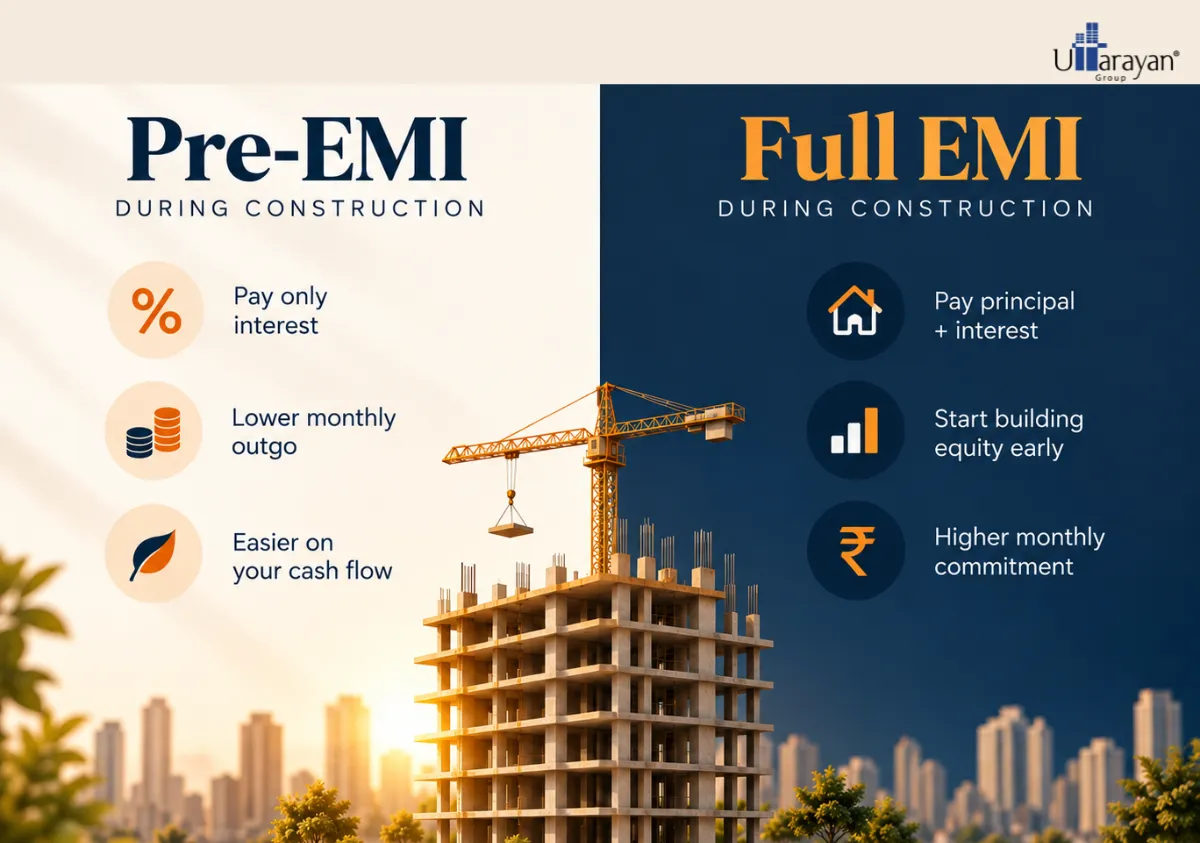
Short answer: Full EMI usually costs less over time. Pre-EMI keeps your monthly outgoings lower whil [...]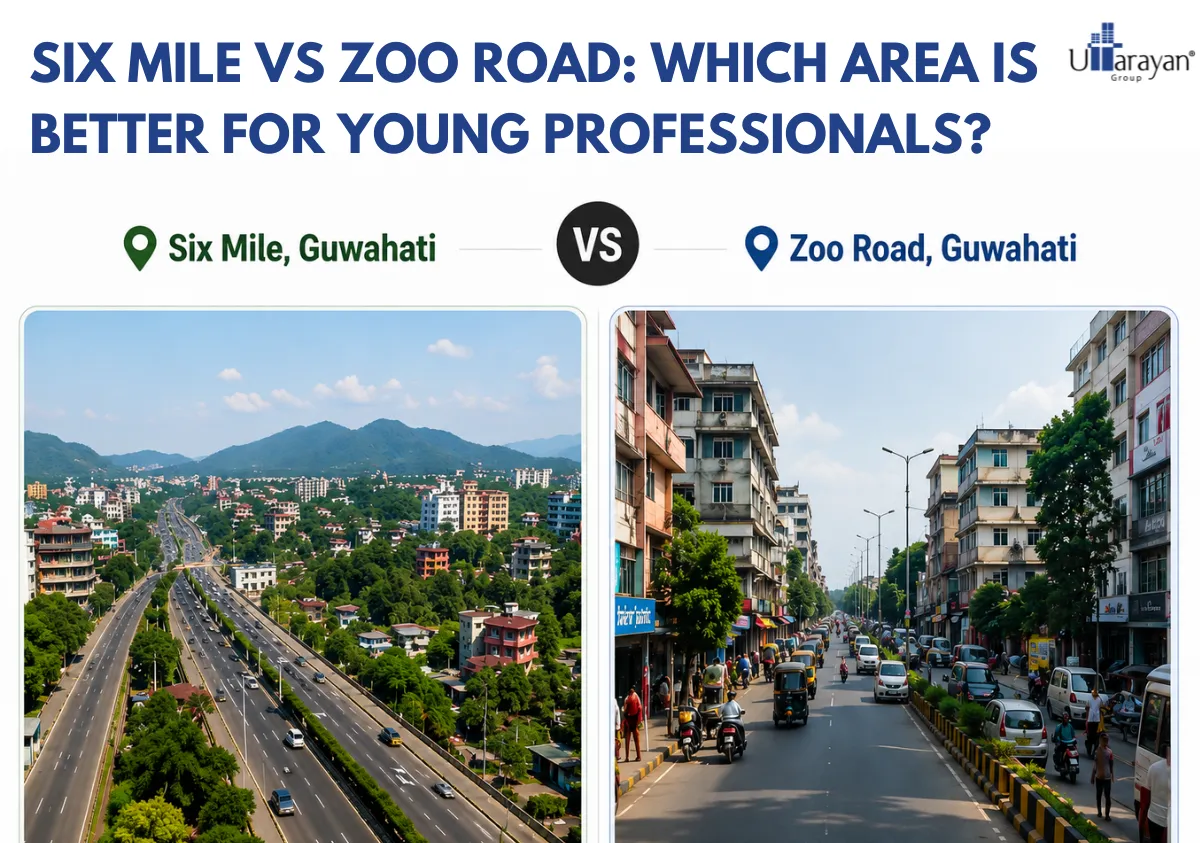
Six Mile, Guwahati Vs Zoo Road: Which Ar [...]
If you're a young professional moving to Guwahati or already here and thinking of switching neighbou [...]Looking for a dream home?
We can help you realise your dream of a new home.

0 Comments