
Get Support
+91 98540 40005

Real Estate Terms & Jargons Every First-Time Buyer Must Know
-
 By: admin
 - 11th July, 2025
- 0 Comments
- 861 Views
.webp)
If you're a home buyer first time, navigating the world of real estate can feel like you're trying to decode a foreign language. From "carpet area" to "circle rate" and "FSI," the real estate terms thrown around can be mind-boggling. But don't worry - we've got your back.
In this blog, we'll break down the most common real estate terminologies and jargon terms every newbie must know before signing on the dotted line. Whether you're planning to invest in a cozy 1BHK or one of the luxurious flats by the Uttarayan Group in Guwahati, understanding the lingo is the first step to owning your dream home without surprises.

Let's decode this real estate dictionary together.
1. Carpet Area vs Built-Up Area vs Super Built-Up Area
This one confuses home buyers first time every single time.
- Carpet Area: The actual usable area within the walls of your flat.
- Built-Up Area: Carpet area + thickness of the inner walls + balcony.
- Super Built-Up Area: Built-up area + proportionate share of common amenities like staircases, lifts, and lobby.
Why it matters: Developers advertise super built-up areas, but you live in the carpet area. So always ask for the carpet area before comparing prices! Understanding these distinctions is key when learning real estate terms in India applies to residential housing.
2. Circle Rate (Guideline Value)
The minimum rate at which a property can be registered in an area, set by the state government.
Why it matters: If you're buying a flat in Guwahati, for example, and the actual transaction value is below the circle rate, you'll still have to pay stamp duty based on the circle rate. This is one of the most state-specific real estate terms in India varies significantly across.
3. FSI (Floor Space Index)
This real estate term refers to the maximum floor area that a builder can construct on a plot of land.
Why it matters: More FSI = more floors = more flats. If a builder exceeds the allowed FSI, the construction is illegal. Always verify project approvals. FSI is one of the most regulated real estate terms in India builders must comply with.
4. Allotment Letter & Sale Agreement
- Allotment Letter: Issued by the builder once you book a flat.
- Sale Agreement: Legal document that outlines the terms of sale including possession date, payment plan, and penalties.
Bonus Tip: Make sure both documents mention the exact real estate terminologies like carpet area, parking rights, and possession timeline.
5. RERA Number
The Real Estate Regulatory Authority (RERA) number proves the project is legally registered.
Why it matters: Every genuine property listing, like the luxurious flats by Uttarayan Group in Guwahati, has a RERA number. It protects buyers from delays, fraud, and misrepresentation. These documents often include essential real estate terms in India recognizes legally.
6. Stamp Duty & Registration Charges
These are the government taxes you pay while transferring ownership. Varies from state to state (in Assam, it's around 8-9%).
Why it matters: Often overlooked by home buyers first time, these costs can add up to several lakhs! These are essential real estate terms in India includes in every property transaction.
7. Down Payment vs Loan Disbursement
- Down Payment: Amount you pay upfront (usually 10-20%).
- Loan Disbursement: Amount your bank releases to the builder.
Jargon terms to watch for in this context: "pre-EMI," " loan sanction," and "possession-linked plan." These appear frequently in bank documents and real estate terms in India financial institutions use.

8. Possession Certificate vs Occupancy Certificate
- Possession Certificate: Given when the builder hands over the flat.
- Occupancy Certificate (OC): Issued by the municipal authority, confirming the building is ready to live in.
Why it matters: Never move in without an OC. No OC = no legal occupancy. These are standard legal documents under real estate terms in India municipal bodies require.
9. Token Amount vs Booking Amount
- Token Amount: Small fee (usually ?10k-?50k) to show interest.
- Booking Amount: Larger chunk (5-10%) to confirm your intent.
Home buyers first time often mix them up. Always ask if token is refundable and get it in writing. These are commonly used real estate terms in India wide, especially in metro cities.
10. Maintenance Charges
These are monthly charges paid to the housing society for common services.
Pro tip: Premium flats, like those from Uttarayan Group, often have amenities like gyms, gardens, rooftop lounges - check what's covered in the maintenance.
11. Freehold vs Leasehold Property
- Freehold: You own the land and the property.
- Leasehold: You own the property for a set period, not the land.
If you're eyeing long-term investment in Guwahati, go for freehold - especially when choosing from a reliable builder like Uttarayan Group. Understanding the difference between these helps decode key real estate terms in India uses in property rights.
12. Escrow Account
Builders must deposit customer payments into a government-monitored escrow account under RERA guidelines.
Why it matters: Reduces risk of fraud. Trusted builders, including Uttarayan Group, strictly follow this norm.
13. Title Deed & Encumbrance Certificate
- Title Deed: Proves ownership.
- Encumbrance Certificate (EC): Confirms that the property has no legal dues or liabilities.
Never skip title verification. It's non-negotiable, even with a top-notch builder.
14. NOC (No Objection Certificate)
You need several NOCs from municipal departments for electricity, water, and fire safety.
Projects like Uttarayan's The Majesty in Guwahati come with pre-approved NOCs - so you can buy with confidence.
15. Completion Certificate (CC)
Issued by local authorities when construction meets the approved plan and building norms.
Why it matters: No CC = no legal standing for the building. Always ask for this certificate before taking possession.
Legal Documents Every Home Buyers First Time Must Understand

Buying your first home isn't just about location and interiors - it's about documents. Here's a simple breakdown of the legal paperwork you'll encounter:
- Sale Deed: The final and most important document that legally transfers ownership from seller to buyer. You must register this at the sub-registrar's office to complete the sale.
- Encumbrance Certificate (EC): This proves the property is free from any financial or legal liability (like loans, disputes, or mortgages). Always check the EC before you buy.
- Occupancy Certificate (OC): Issued by the local municipal authority once the building is completed and safe to occupy. No OC? Don't move in.
- Completion Certificate (CC): Confirms that the builder followed approved plans and building norms. A must-have before possession.
- Allotment Letter: Issued by the builder after you book a property. It contains payment schedules and other details.
These are all essential under the legal framework that governs real estate terms in India mandates for developers and buyers alike.
Financial Jargon Terms Every Home Buyers First-Time Should Know
Let's break down some of the most misunderstood real estate terminologies and jargon terms related to money:":
- EMI (Equated Monthly Installment): The monthly amount you pay to the bank after taking a home loan. Depends on the loan amount, interest rate, and tenure.
- Down Payment: The upfront amount you pay before the bank sanctions the remaining through a loan. Usually 10-20% of the property value.
- CLP (Construction-Linked Plan): A payment plan where you pay in phases based on the construction progress. Great for avoiding lump-sum payments.
- Pre-EMI: If you take a loan before possession, you'll pay only the interest (not principal) as Pre-EMI until full disbursement.
- Loan-to-Value Ratio (LTV): The ratio of the loan amount to the property value. A higher LTV means a lower down payment from you, but may affect your interest rate.
These financial aspects are part of everyday real estate terms in India uses in home loans and payment structures.
A-to-Z Real Estate Terms Quick Reference
Here's a quick glossary to make this blog ultra-skimmable and bookmark-worthy for home buyers first time:
| Meaning | Term |
|---|---|
| Allotment Letter | Builder’s confirmation of your booking |
| Built-Up Area | Carpet Area + inner walls + balcony |
| Carpet Area | Usable floor area inside the walls |
| Circle Rate | Minimum property valuation set by the government |
| CLP | Payment plan tied to construction milestones |
| Completion Certificate | Confirms that construction meets approved norms |
| Down Payment | Initial amount you pay before the loan kicks in |
| EMI | Your monthly home loan installment |
| Encumbrance Certificate | Legal proof that the property is free from debt |
| FSI (Floor Space Index) | Permitted buildable area on a plot |
| Loan Disbursement | Loan amount released to the builder in phases |
| LTV (Loan-to-Value) | Loan amount compared to property value |
| Occupancy Certificate | Allows you to legally occupy the flat |
| Pre-EMI | Interest-only payment until possession |
| RERA | Authority that regulates real estate and protects buyers |
| Sale Deed | Final legal document of ownership transfer |
| Super Built-Up Area | Built-up area + share in common areas |
| Token/Booking Amount | Amount to reserve the flat before agreement |
This list is an excellent resource for understanding core real estate terms in India relies on in urban development and property sales.
Spotlight on Uttarayan Group: Building Luxury, Trust & Transparency
For home buyers first time, the real estate terms can seem like a maze. But if you choose the right developer, a lot of the confusion goes away. That's where Uttarayan Group shines.
They're known for their luxurious flats in Guwahati - spacious layouts, vastu-compliant homes, prime locations, and a seamless legal process that keeps real estate terminologies transparent.
Their flagship project The Majesty is a stunning example - modern amenities, top-notch security, ample parking, and every jargon term explained clearly in the buyer agreement. It's perfect for first-time buyers looking for reliability and elegance. Their approach makes understanding real estate terms in India enforces much easier for new buyers.
Bonus Suggestions for Future Flat Buyers in Guwahati
- Visit during different times of the day - Check lighting, traffic, and noise.
- Talk to current residents - They'll tell you the truth about maintenance and builder support.
- Compare carpet area, not price per sq. ft. - You live in the carpet area!
- Verify the RERA number online - Trust, but always verify.
- Choose builders like Uttarayan Group - They offer clarity in real estate terminologies, transparency in pricing, and top-quality construction.
With these tips, you'll feel more confident navigating through real estate terms in India uses in flat purchases.
FAQs - Real Estate Terms for First-Time Buyers
1. What are the most important real estate terms I should know as a first-time homebuyer?
You should know terms like carpet area, built-up area, super built-up area, RERA number, stamp duty, and occupancy certificate.
2. What's the difference between sale deed and agreement to sell?
An agreement to sell outlines the terms, while a sale deed legally transfers ownership. The deed is registered after the full payment.
3. How can I avoid being scammed while buying a flat?
Verify the builder's RERA number, check for completion and occupancy certificates, and consult a legal advisor for document checks.
4. Are luxurious flats worth it for first-time buyers?
Yes, especially when builders like Uttarayan Group provide value-added amenities, transparent real estate terminologies, and legally approved projects.
5. What does RERA protect me from?
RERA protects you from delays, price manipulation, and project misrepresentation. Only buy properties with RERA registration. Only buy properties with RERA registration, as per real estate terms in India mandates.
When it comes to investing in a home - whether it's your first or your fifth - knowledge is your biggest asset. Master these real estate terminologies, stay alert about jargon terms, and you'll not just survive the buying process - you'll own it.
Happy house hunting. Or better yet, start your journey with the Uttarayan Group. Because real luxury starts with real trust.

Admin
Uttarayan GroupDedicated to creating thriving communities through innovative, quality real estate developments in North-East India. Dedicated to creating thriving communities through innovative, quality real estate developments in North-East India.
Related Post
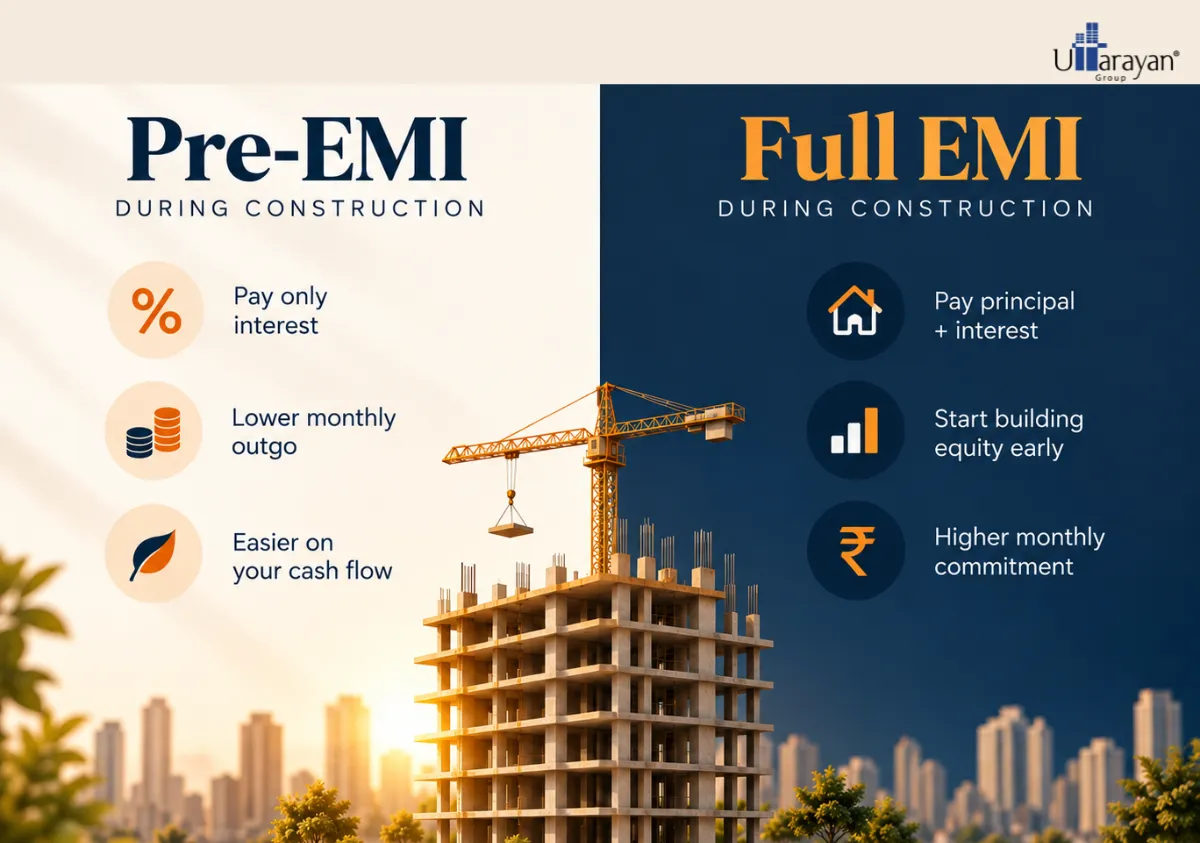
Pre-EMI Vs Full EMI During Construction: [...]
Short answer: Full EMI usually costs less over time. Pre-EMI keeps your monthly outgoings lower whil [...]
Six Mile, Guwahati Vs Zoo Road: Which Ar [...]
If you're a young professional moving to Guwahati or already here and thinking of switching neighbou [...]Looking for a dream home?
We can help you realise your dream of a new home.

0 Comments