
Get Support
+91 98540 40005

Buying Vs Renting A Home: Roadmap From Stress To Own Address
-
 By: Admin
 - 5th December, 2025
- 0 Comments
- 778 Views
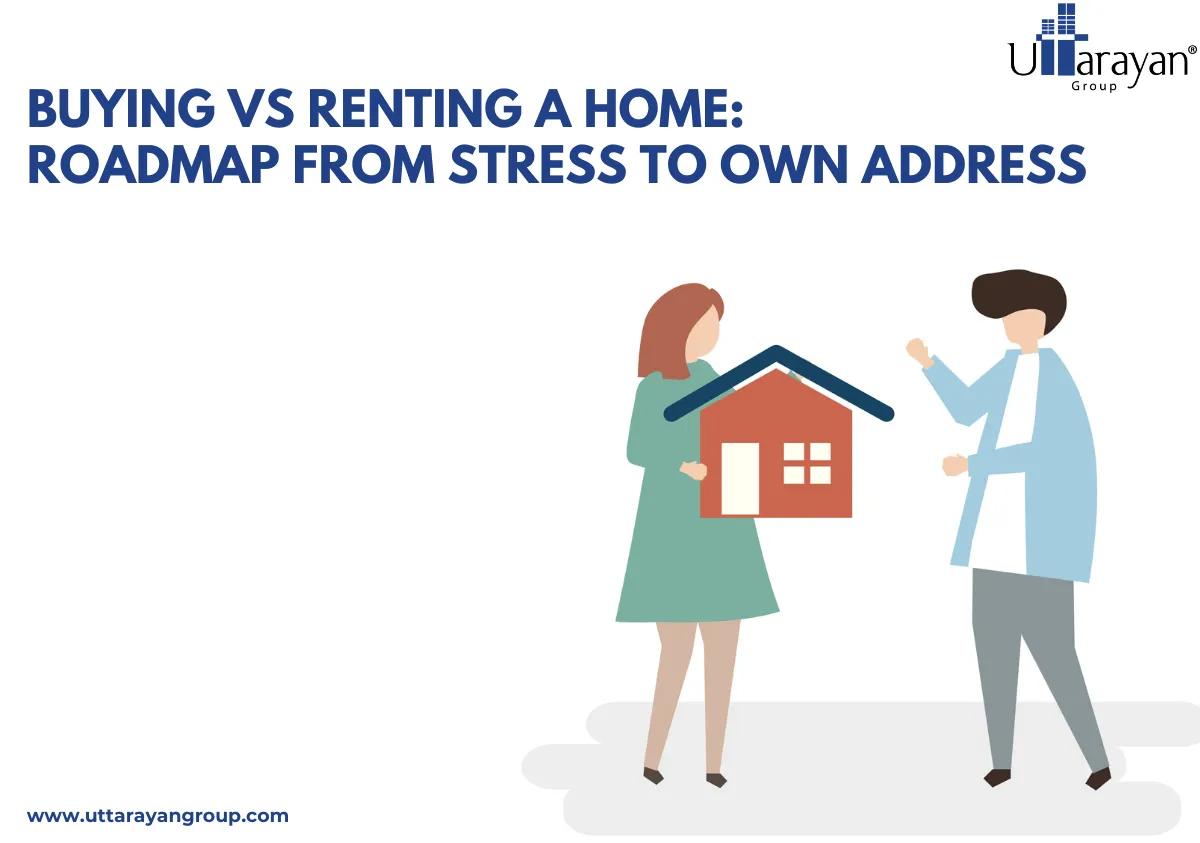
The debate of buying vs renting a home isn't just financial-it's emotional, practical, and deeply personal.
While many feel renting a home is easier, it always comes with its own mini-heart attacks. From the sudden rent hike and landlord's threats to follow the rules to the fear of being asked to vacate at any time, renting makes one feel constantly unsettled.
But what if this year, instead of renewing your lease, you started renewing your life plan?
Imagine pausing the "rent anxiety loop" and starting a simple 6-month roadmap that takes you from comparing buying vs renting a home to actually holding the keys to your own address.
Homeownership is not about being rich enough, but about being ready and structured. And with this financial plan, you can get there in just six months, especially if you are a first-time home buyer.
Buying vs renting a home-Quick comparison chart
| Factor | Renting a Home | Buying a Home |
|---|---|---|
| Monthly Cost | Lower upfront cost but rent increases yearly | Higher upfront cost but EMI stays stable |
| Long-Term Value | No asset created | Property becomes your owned asset |
| Flexibility | High (easy to move anytime) | Medium (moving means selling/ renting the flat) |
| Stability | Depends on landlord | Full control, long-term security |
| Maintenance | Usually handled by landlord | Handled by you |
| Financial Growth | Money never returns | Property value may appreciate |
| Freedom | Limited: rules, restrictions, no customisation | Total freedom to design & live your way |
| Ideal For | Short-term job locations, uncertain career plans | Long-term settlement, family planning, investment goals |
When you look at the chart closely, you realise renting solves today's problem, but buying solves your future. Ten years from now, your rented house will be someone else's income. So, it's better to start planning for your own home, your asset.
A month-by-month roadmap to break the buying vs renting a home dilemma
This guide will turn your goal into a realistic and structured plan. Once you start ticking off those little milestones each month, you will soon be able to achieve that one major milestone of owning your home. And we all know what an emotional win that can be.
This is how it will be:
Month 1: Get financial clarity (The "building your confidence" month)
Before deciding between buying vs renting a house, prepare yourself to get clarified on the basics: Where do you stand financially today?
And how to do that?
1. Check your credit score
Most banks consider 700+ as a good CIBIL score for home loan approval. The more you focus on maintaining a healthy financial score, the greater your chances will be of getting a home loan approved.
Your score is going to influence:
- your interest rate
- Your loan eligibility
- your EMI
And this step alone is going to reduce half your anxiety.
What is a good cibil score for home loan? Read me: How To Avoid These Key Reasons for Rejection of Home Loan
2. Understand "How much home loan can I get?"
Banks will calculate this based on:
- your salary
- existing EMIs
- age
- credit history
You can use a simple EMI calculator to see how your current rent compares to a possible EMI. Many renters in cities like Guwahati realise that house rent in Guwahati is often very close to what they may pay monthly for their own flat.
Need home loan tips? Read me: Which Home Loan Structure Best Fits Your Salary In Guwahati?
3. Start the down payment preparation to settle the buying vs renting a home question
Keep a 20% target for home loan down payment, though many loans allow 10-15% of the amount as well.
Why is this an emotional win? Your finances will feel organised, and for the first time, buying a home won't feel scary.

Month 2: Define your home requirements (The "gaining clarity" month)
Now that you have your numbers, get ready to shift to what you actually want.
What can you begin with:
1. First of all, make a non-negotiable list
- Location
- Number of bedrooms
- Budget
- Amenities
- Daily commute
2. Begin shortlisting
Ask yourself important questions like:
- How to buy a flat that fits my lifestyle?
- What are the things to check before buying a flat?
Start shortlisting and zeroing in on the preferred city, comparing neighbourhoods and upcoming areas. This is also where you will explore options, such as whether you plan to buy flats in Guwahati or other Tier 2 cities, especially in areas with new infrastructure development.
Why is this an emotional win? You stop dreaming randomly and start visualising your home clearly.
Month 3: Explore loan options (The "getting empowered" month)
This month is all about removing the fear around loan processes, becoming more confident, and applying. What do you need to do to resolve the debate over buying vs renting a home?
1. Compare 5-6 banks
Look at:
- interest rates
- processing fees
- flexibility in repayment
- fixed vs. floating rates
2. Understand the documents required for home loan
This typically includes:
- ID proof
- PAN
- Salary slips
- Bank statements
- Income tax returns
- Property documents (later)
Once you get to know the documents, the loan journey will feel far less intimidating.
Why is this an emotional win? Because once you start speaking the bank's language, you feel more empowered.
Read me: Your Home Loan Down Payment Guide to Buying Flats in Guwahati
Month 4: Begin site visits (The "reality check" month)
It's finally time to see homes in real life. Unless you step out and start checking properties physically, you won't be able to lock in the final deal. So, what to get started with?
1. Visit 4-6 shortlisted flats
And take notes on:
- neighbourhood vibe
- light & ventilation
- construction quality
- builder reputation
- resale value
- connectivity
Ask all important questions to avoid surprises later. Site visits are crucial for comparing buying vs renting a home because once you walk into a good flat, renting starts to look less comforting.

2. Talk to residents
Why? Because nobody gives better clarity than people who already live there.
Why is this an emotional win? Picturing your sofa, your plants, your mornings in your home makes ownership feel real.
Month 5: Negotiate & finalise (The "taking control" month)
You have done the groundwork, and now it's time to make it count. So, start by:
1. Negotiating confidently
Builders always have room for:
- price reduction
- waiver on parking
- flexibility in payment plans
2. Getting a home loan pre-approval
This shows the builder that you are serious, and they will speed up the paperwork.
3. Rechecking documents
Your bank will verify everything one more time, including title deeds, layout approvals, and NOC documents. So, check all the documents required for home loan.
Why is this an emotional win? You will begin to feel more in control of the biggest decision of your life.
Month 6: Loan approval, registration & key day (The Freedom Month)
Everything comes together now. By this time, you are just minutes away from holding the key to your dream home and ending the buying vs. renting a home debate.
Here's what you need to focus on:
1. Loan sanction & agreement signing
Sign your loan agreement, register your property, and complete final payments.
2. Perform a final inspection
Check flooring, plumbing, electrical points-everything.
3. You get the keys
This is the moment where your buying vs renting a house journey will end. Your stress will finally transform into stability, security, and belonging.
And why is this an emotional win? You get to step into your new home, not as a visitor, but as the owner.
| Month | Focus Area | Key Actions | Why It Matters |
|---|---|---|---|
| Month 1 | Financial Clarity | • Check CIBIL score (700+ ideal) • Compare rent vs EMI • Estimate how much home loan can I get • Start home loan down payment savings | Builds confidence and shows owning a home may be more achievable than it seems. |
| Month 2 | Define Requirements | • List must-haves & good-to-haves • Compare areas & budgets • Start researching how to buy a flat • Learn things to check before buying a flat | Helps you shift from dreaming to having a clear picture of the home you want. |
| Month 3 | Loan Preparation | • Compare bank loan options • Learn fixed vs floating rates • Gather documents required for home loan • Get loan pre-approval | Removes confusion around home loans and speeds up buying decisions. |
| Month 4 | Site Visits | • Shortlist 4–6 properties • Evaluate construction quality, ventilation, connectivity • Check builder reputation • Compare buying vs renting a home in your shortlisted areas | Turns your plan into reality — you start visualising your life in each space. |
| Month 5 | Negotiation & Finalising | • Negotiate pricing, parking, fees • Confirm payment plans • Align loan timelines • Re-check legal documents | You take control of the buying process and lock the best possible deal. |
| Month 6 | Loan + Registration + Keys | • Loan sanction • Agreement signing • Property registration • Final inspection checklist • Collect keys | Your renting days officially end — you become a homeowner. |
Why This Roadmap Works
Because it breaks down a big dream into small, doable steps. You realise you don't need luck; just clarity, consistency, and a simple structure.
In 6 months, you will go from:
- worrying about rent
- stressing over landlord rules
- feeling insecure every year
…and walk into a place that's finally yours.

Thinking of buying flats in Guwahati?
If you are comparing buying vs renting a home and are ready to explore real options, this is the best time to buy flats in Guwahati with new developments growing across the city.
Just remember: you don't need to rush. You just need to start.
Click now to connect.
FAQs
1. What's the biggest difference between buying and renting a home?
Owning means you build equity and control the space, while renting gives flexibility and lower upfront cost without long-term commitment.
2. Is buying always better than renting?
No. Buying can be better if you plan to stay long-term and want investment value, but renting might be smarter if you expect job moves or want lower maintenance responsibility.
3. How do I decide whether I should buy or rent?
Think about your budget, job stability, future plans, and how long you expect to stay in one place. Crunching numbers like monthly cost + long-term value helps make it clear.
4. What costs should I consider when buying a home?
Upfront costs (down payment, stamp duty), monthly mortgage payments, property taxes, insurance, and maintenance.
5. What costs should I expect when renting?
Monthly rent, security deposit, possible maintenance or utility charges, and periodic rent increases.
6. Can renting ever help me prepare for buying?
Yes! Renting can let you save for a down payment, understand neighbourhoods you like, and improve your credit before applying for a home loan.
7. Does renting hurt my financial future?
Not necessarily. Renting can give you financial flexibility to invest elsewhere, though you won't build equity like you do with buying.
8. How long should I plan to stay in a place before buying?
A common rule of thumb is 5+ years to cover buying/selling transaction costs and gain value from ownership - but personal situations vary.
9. What happens to my investment if property prices fall?
If you own, your home value can drop, affecting your equity. Renters aren't exposed to property value risk, but also don't gain if prices rise.

Admin
Uttarayan GroupDedicated to creating thriving communities through innovative, quality real estate developments in North-East India. Dedicated to creating thriving communities through innovative, quality real estate developments in North-East India.
Related Post
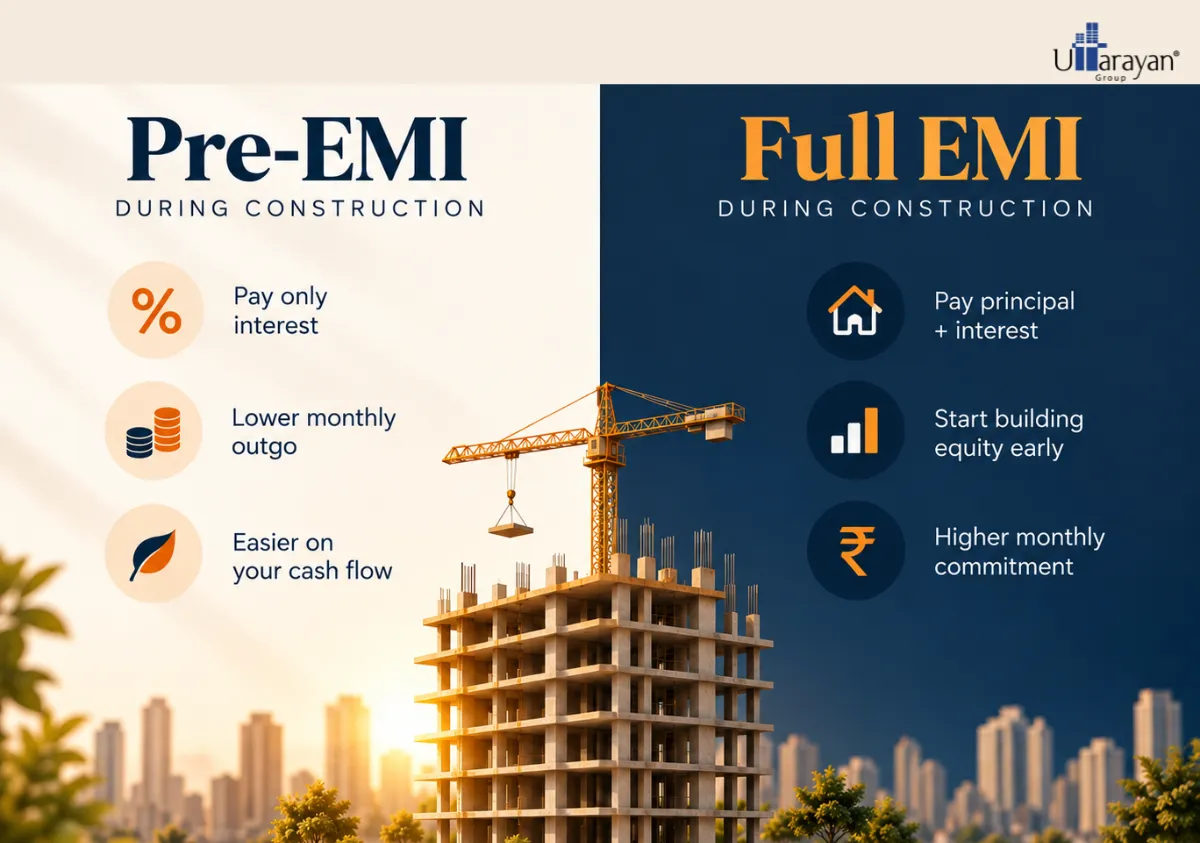
Pre-EMI Vs Full EMI During Construction: [...]
Short answer: Full EMI usually costs less over time. Pre-EMI keeps your monthly outgoings lower whil [...]
Six Mile, Guwahati Vs Zoo Road: Which Ar [...]
If you're a young professional moving to Guwahati or already here and thinking of switching neighbou [...]Looking for a dream home?
We can help you realise your dream of a new home.

0 Comments